
Microsporogenesis in Botany.
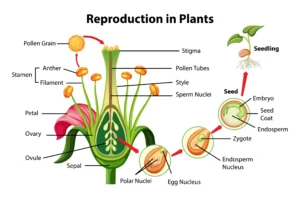
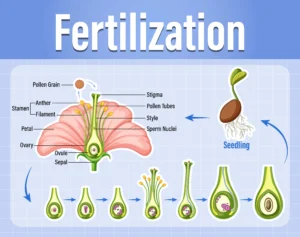
Structure of the Stamen.
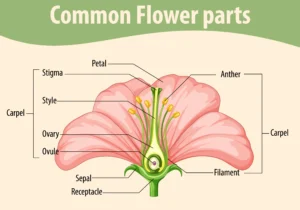
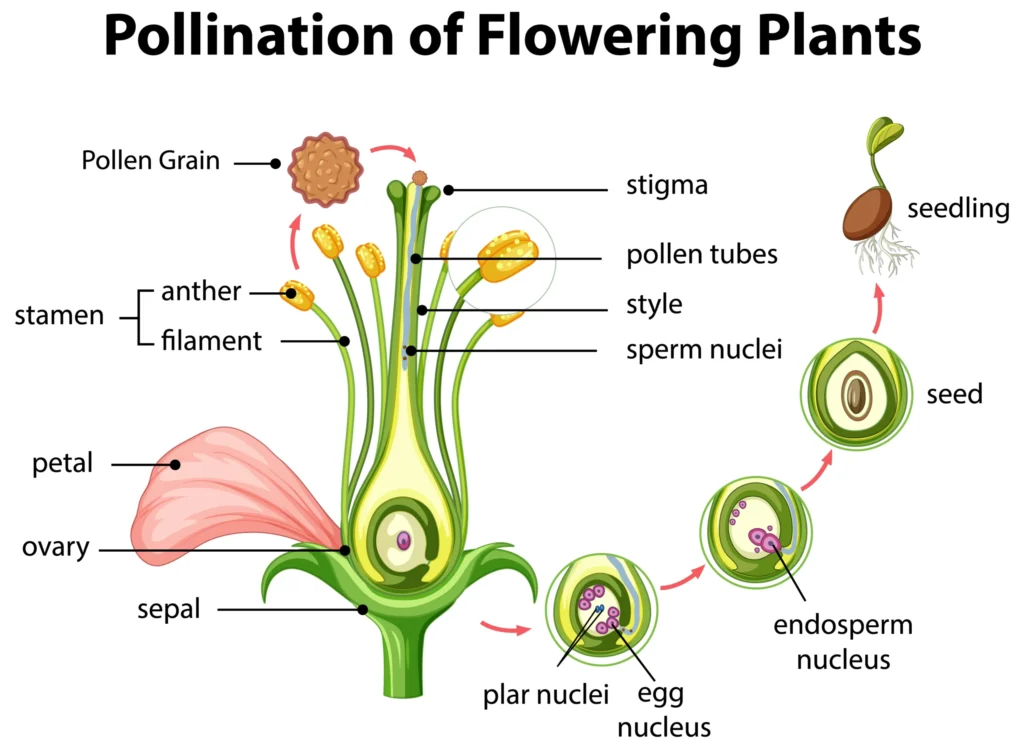
A typical stamen is a bilocular, divided into two parts.
- Long and thin filament
- Anther (bilobed)
Structure of the anther.
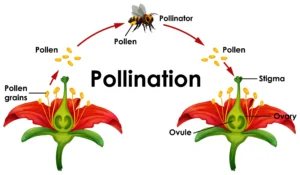
Pollen grains develop in the microsporangium within the anther. The anther has a four-sided (quadrangular) structure, with microsporangia present at each corner.
Structure of the Microsporangium.
- Epidermis – Initially, the anther is a group of undifferentiated cells. Surrounding it is an outer layer called the epidermis, which is single-celled.
- Endothecium – The layer beneath the epidermis is called the endothecium.
- Middle Layer – This is short-lived.
All three layers provide protection, dispersal, and dehiscence.
- Tapetum – This is the innermost layer, providing nutrition to the developing microspores. The cells of the tapetum are filled with dense cytoplasm containing multiple nuclei.
Structure of the anther.
Microsporogenesis.
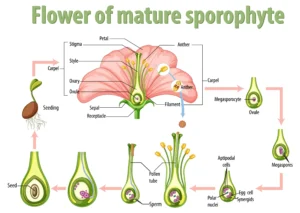
Before reproduction (prefertilization stage), the microsporangium matures and forms the anther at the fertilization stage. Similarly, the microspores mature and form pollen grains. Within the anther is the microsporogenesis tissue, a group of homogeneous cells, each of which functions as a microspore parent cell. Thus, the process of microspore formation from a pollen parent cell through meiosis is called microsporogenesis. Initially, the four microspores in the microsporangium are separated by a wall called a microspore tetrad/tetrend. When the microspores separate from the callose wall of the tetrad within the anther, they are released, forming pollen grains.
Structure of a pollen grain.
A pollen grain has a diameter of 20-25 micrometers. The pollen grain is surrounded by two coverings: the outer covering is called the outer coat and the inner covering is called the inner coat. An organic substance called sporopollenin is deposited on the outer coat. It is resistant to high temperatures and all acids and alkalis. This is why pollen grains persist for long periods of time and are also found as fossils. The outer coat bears tiny pores, called germ pores, from which the pollen tube emerges during the germination of the pollen grain. The lower layer is the endosperm, which is composed of pectin and hemicellulose. When the pollen grain matures, two cells are formed: the vegetative cell and the generative cell. The vegetative cell is large, containing abundant food reserves and an irregularly shaped nucleus. The generative cell is small, spindle-shaped, and contains the nucleus.
Important Notes:
Over 60% of angiosperms shed their pollen grains at the two-celled stage. In the remaining 40% of species, the generative cell divides by mitosis to form two male gametes, meaning pollen grains are shed at the three-celled stage. For example, the Leguminosae, Rosaceae, and Solanaceae families are leguminous plants (nitrogen-fixing), which are found in 40% of angiosperms as three-celled pollen grains.
The first stage of the male gametophyte is the pollen grain.
Pollen Bank – Low Temperature Preservation (-196°C).
It is possible to store pollen grains in liquid nitrogen at -196°C for several years. These pollen grains are used in crop breeding.
Economic importance of pollen grains.
Pollen grains are rich in nutrients, hence they increase the performance of athletic and racing horses. Pollen grains cause chronic diseases like asthma and bronchitis.
Pollen grains cause severe allergies and bronchial pain in some people.
Example – Parthenium or carrot grass.