Comparison Operators =, >, <, >=, <=, <>
Comparison Operators =, , , =, =,

Comparison Operators =, >, <, >=, <=, <>

Comparison Operators (=, >, <, >=, <=, <>) In SQL database management systems, comparison operators are used to compare data values ​​in database table queries. Comparison operators help database users filter table data and extract table data and information based on specific conditions or logic. So, let's learn more about comparison operators in the SQL…

0 Comments

Selecting specific columns

Selecting specific columns

Selecting specific columns In SQL database management systems, instead of using the * asterisk wildcard to select all table columns in an existing table, database users can preview specific column values ​​from an existing table by listing the column names in the SELECT SQL database command or statement that they want to display in the…

0 Comments
Setting up a Database Environment Installing MySQL, PostgreSQL, etc.

Setting up a Database Environment Installing MySQL, PostgreSQL, etc.

Setting up a Database Environment Installing MySQL, PostgreSQL, etc. Manually setting up a SQL database management software environment on your local computer involves installing database management system software (DBMS) such as MySQL, PostgreSQL, or any other RDBMS database software on your local computer, device, or server. Installation steps may vary slightly depending on the database…

0 Comments
SQL Database Architecture Tables, Records, Fields

SQL Database Architecture Tables, Records, Fields

SQL Database Architecture (Tables, Records, Fields) Information in SQL-created database tables relies on the RDBMS relational concept, where system- and user-created databases store and retrieve information in a tabular format, which is organized or grouped into tables. User-created database tables are the basic building blocks of a relational database concept. Within these user-created database tables,…

0 Comments
Introduction to SQL Structured Query Language

Introduction to SQL Structured Query Language

Introduction to SQL (Structured Query Language) SQL (Structured Query Language) is a well-known, very powerful, and standard database operations programming language. SQL is used to manage and control multiple relational database tables or databases through SQL query operations. SQL database commands allow database administrators or users to interact with the database through command statements, which…

0 Comments
Types of Databases Relational vs. Non-Relational

Types of Databases Relational vs. Non-Relational

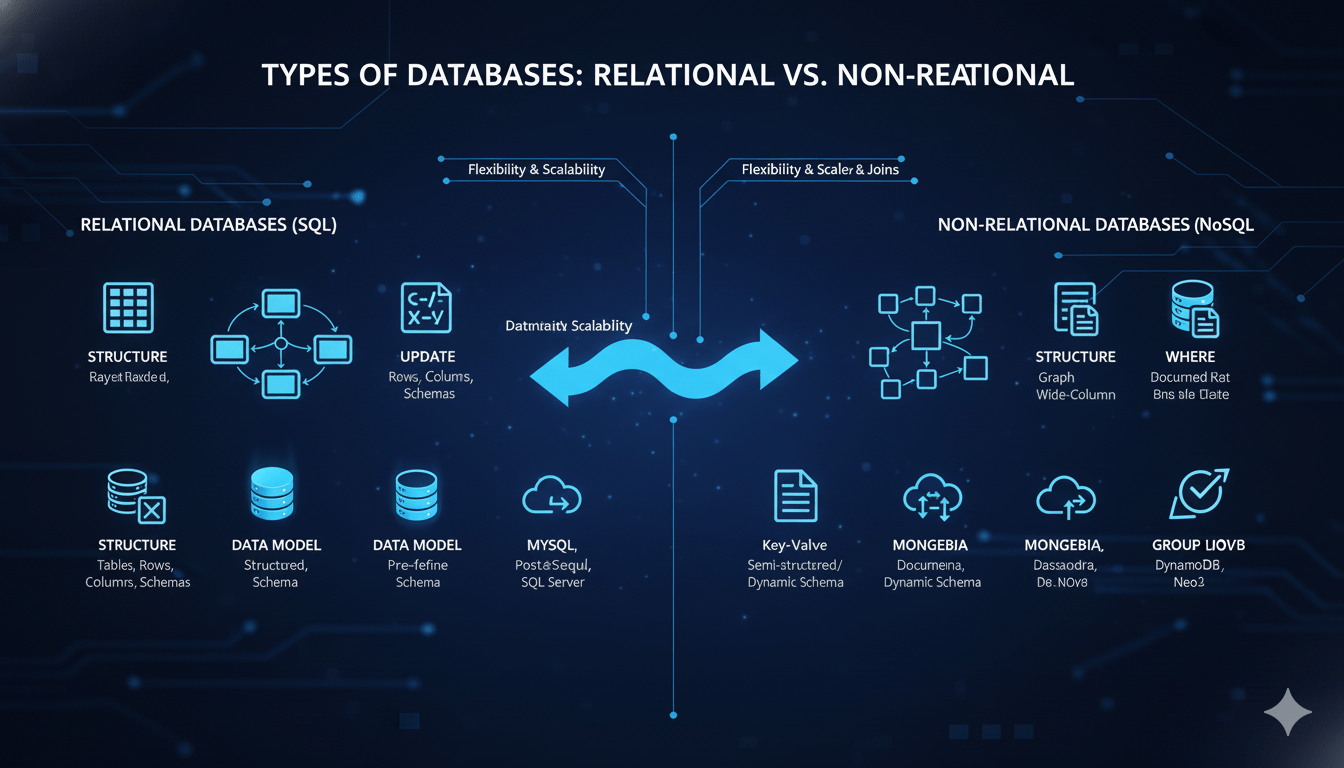
Types of Databases Relational vs. Non-Relational Database systems are generally divided into two main categories, known as relational databases and non-relational databases, based on their default storage method, schema structure, and management system processes. So, let's understand relational databases and non-relational databases in SQL better. Relational Databases (RDBMS) in SQL. A relational database stores data…

0 Comments
What is a Database?
What is a Database

What is a Database?

What is a Database? A database is a collection of user-defined, custom-created data stored in a structured order consisting of rows, columns, fields, and tables. It is stored and managed in a tabular format using online or offline software, allowing easy access and retrieval of database information, manipulation, and storage in a secondary storage location.…

0 Comments
Creating and Managing Database Users

Creating and Managing Database Users

Creating and Managing Database Users Creating new users in SQL database and managing existing database users indicates who is using database features and functions with how much privilege in the existing SQL database. In which database users have appropriate access to your database, in which database user roles, multiple levels of database user privileges exist…

Comments Off on Creating and Managing Database Users
Creating, Altering, and Dropping Views

Creating, Altering, and Dropping Views

Creating, Altering, and Dropping Views In SQL database tables, views are virtual type table view formats created by querying data from single or multiple SQL tables. You can control and manage how data is represented in your SQL table database through views in SQL. Each SQL table view provides you with many tools and features…

Comments Off on Creating, Altering, and Dropping Views
Benefits of Indexing

Benefits of Indexing

Benefits of Indexing Indexing in SQL table is a database arrangement or database table information optimization management process. Which helps the user in fast access and retrieval by properly indexing the database table data and information in the secondary storage location, which takes less time on data table data modification operation. In SQL, the index…

Comments Off on Benefits of Indexing